How we work · Step 3
Your staging URL, from day one
Step 3 is where it gets built. Clean, modern code on a staging URL you can open whenever you like and watch evolve, with weekly check-ins so nothing is left hanging. That is our web development process: visible to you at all times.
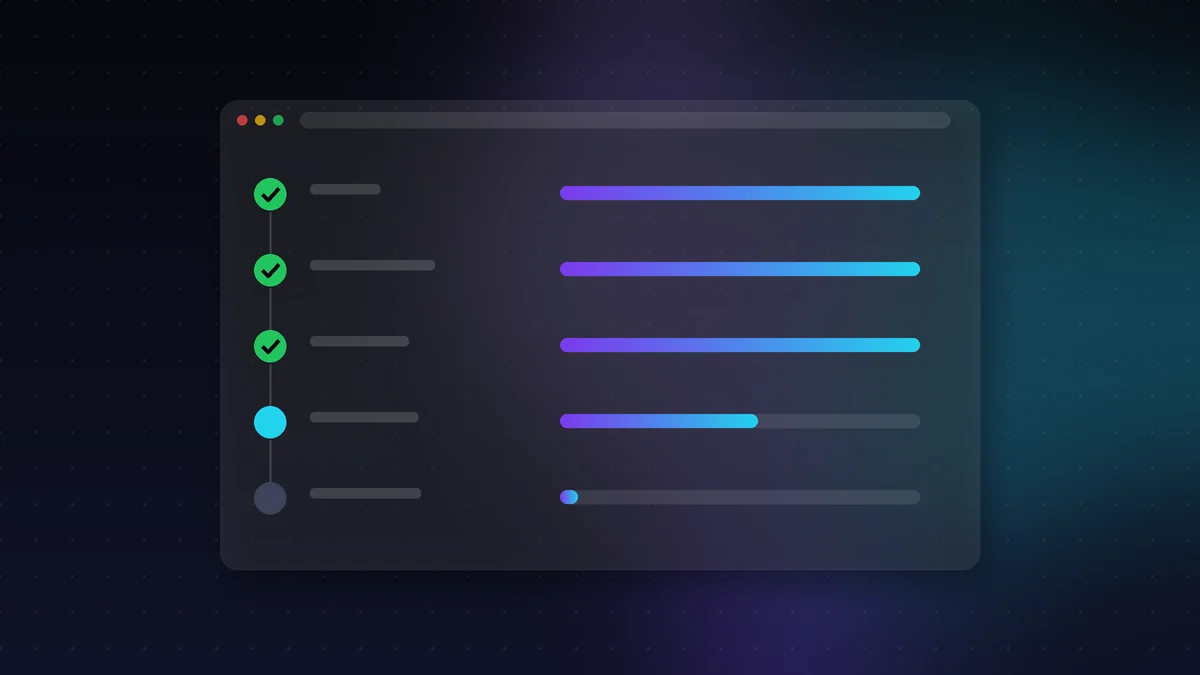
There is no silent phase. The project is visible while it is being built, so milestones are checked on the website itself and not in a progress report.
The web development process, in short phases
We do not build everything at once. Instead, we move forward in small blocks you can review.
That way the web development process never strays far from what you expect.
What happens in this phase
- Your own staging URL from day one.
- Weekly check-ins: progress, pending decisions and what comes next.
- Modern, maintainable code — Next.js, React, headless CMS or WordPress, depending on the case.
- Milestones can be seen on the URL itself, not in a report.
- If something needs rethinking, it is rethought with the project half-built and in plain view.
This changes the kind of conversation. Instead of approving descriptions, you approve something that already works.
How we work against the staging URL
Visible from day one
The URL exists before there is much to see. That way you get used to looking at it and there are no surprises at the end.
- Private access, not indexable
- Updated with every change uploaded
- Already lives on the final hosting
Weekly check-ins
A short note every week: what has been done, what comes next and what decision we are waiting for from you.
- The week’s progress
- Pending decisions
- Risks, if any appear
Code that can be handed over
Standard, documented technology, so the project does not depend on us forever.
- Next.js, React or WordPress
- Headless CMS when it fits
- Documentation in the delivery
What you see during web development
Every step forward appears on the staging URL. For example, a new page or a form that already works.
And you can show it to your team whenever you like, without waiting for a presentation.
Why the staging URL already lives on the final hosting
Many people build on a development server and migrate at the end. That step is exactly where half the problems appear: different versions, paths that change, emails that stop sending.
That is why we set up the staging URL on the final hosting and cloud for businesses. On launch day the project does not move anywhere; it is simply opened to the public.
The staging URL is also served with restricted access and blocked from indexing, so it does not compete with your current website while it is being built.
The web development process and speed
Speed is worked on from the start, not at the end. That is why we measure every page while it is being built.
If something is too heavy, it is fixed right then. That way the web development process leaves no debts for launch.
What gets built here
It depends on the project, and that is why we do not always use the same tool. A corporate website the client will edit usually calls for WordPress; a highly interactive platform calls for Next.js and React.
The decision is made in step 1 and written into the scope, with the reasons. There is no proprietary framework you cannot get out of later.
If the project includes systems integration or bespoke software for businesses, those pieces show up on the same staging URL as they are connected.
Web development built for search engines
Headings, internal links and structured data are built at the same time as the page.
In fact, it is much cheaper to do it this way than to fix it afterwards.
What we check before signing off a phase
Having the project in view is not enough if nobody is looking at the same thing. So every milestone is checked against a short list, always the same, on the staging URL itself.
- That it really works on mobile, not just that it does not break.
- Forms have to arrive where they are supposed to.
- Speed is measured, rather than estimated by eye.
- The texts are yours, with no leftover placeholder text in any corner.
- The heading hierarchy is still the one agreed in the design.
It is unglamorous work, and it prevents the kind of fault that is discovered a week after launch, when it is harder to explain.
How each phase of the web development process is tested
First on desktop and on mobile. Then with the keyboard, to check that the website is accessible.
Finally, we check forms and links. Only then is a phase of the web development process signed off.
When something needs rethinking
It happens in almost every project, and it is not a failure: it is the advantage of having the work in view. An unnecessary form, a step that gets in the way or a screen nobody would use are spotted before the end.
We rethink it with the project half-built, which is when it is cheap. If the change alters the signed scope, we say so in writing before touching anything.
What we need from you during web development
Not much, but on time: reviewing progress and answering specific questions.
If a text or a photo is delayed, we flag it. In the meantime, we carry on with the rest.
And then
When the staging URL is the website you wanted, we move on to step 4: DNS, SSL, analytics and search engine indexing, all handled by us.
The staging URL is the same whether we are building a website or bespoke software, and the design being assembled comes from step 2, the wireframes and visual concepts you already approved.
Staging URL FAQs
Can anyone see it?
No. It has restricted access and is served with indexing blocked, so it does not appear in search engines or compete with your current website.
Can I show it to my team or a partner?
Yes, and it is a good idea. The more eyes look at it during the build, the fewer things are discovered on launch day.
How often is it updated?
Every time we upload a change, so in practice several times a week. The organised summary arrives once a week.
How long does this phase take?
A standard website takes two to four weeks and an online shop four to eight. Apps and bespoke software are planned in milestones you can follow on the URL itself.
What happens to my current website in the meantime?
It keeps working as normal. The switch only happens in step 4, when the domain is pointed at the new project.
Can I upload the content myself?
Yes, if the project includes a content management system. Many people use this phase to add texts and photos while we build.
From the web development process to launch
When everything is approved on the staging URL, the website already lives on its final hosting.
That is why the step to launch is short: the web development process leaves almost everything ready.
Hire this step
Build: hire just this phase
You do not need to hire the whole project. Step 3 can be hired separately and includes complete development on your own staging URL, with weekly check-ins.
- Detailed scope on its product page
- Fixed quote in writing
- The same team from start to finish
Let’s talk
Tell us where your business is and where you want it to be. We reply within one working day with honest advice — and with a plan, if you want one.
The full process
Step 1 discover · step 2 design · step 3 build · step 4 launch · step 5 grow.