We do systems integration so that your tools talk to each other. Data is entered once and reaches wherever it is needed on its own. Nothing typed twice. That is what integrations are about.
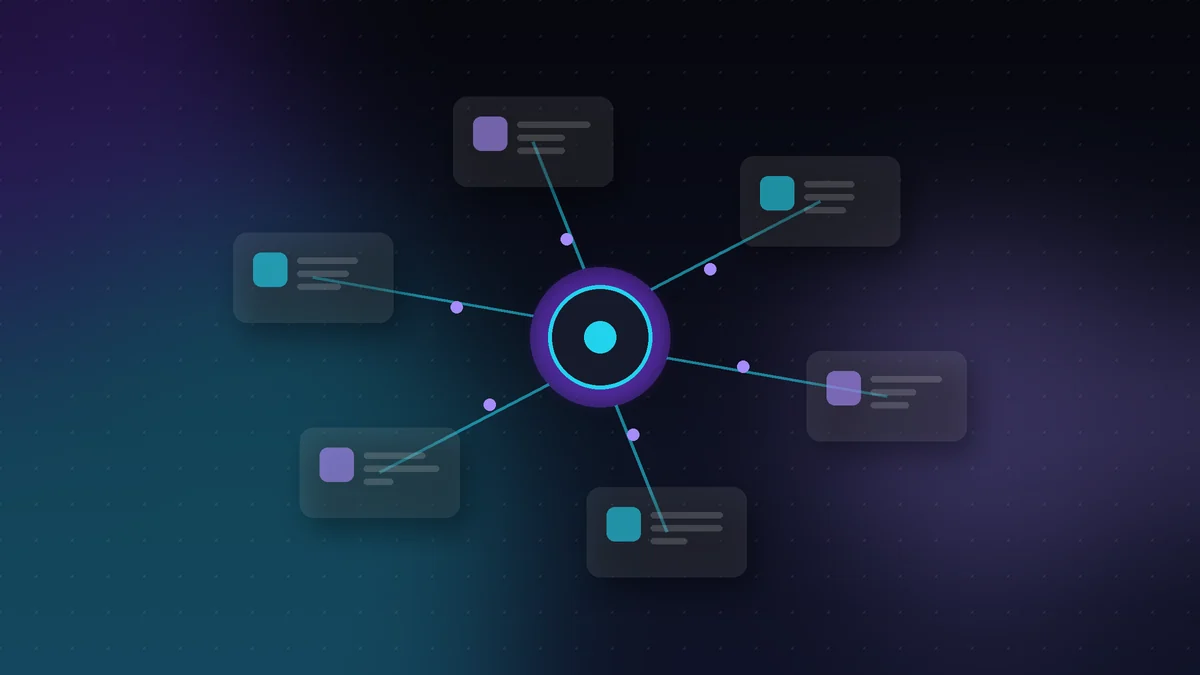
Systems and Application Integration
At ADesigns9 we build systems and application integration solutions that connect a company’s different digital tools and make its processes more efficient.
We connect platforms, applications, services and systems so they can exchange information in an organised, automated way, reducing manual tasks and improving the day-to-day running of the business.
When an integration is part of a web project, we can also combine it with our Web Design service to create a complete digital solution.
Systems integration for businesses
Companies use more and more digital tools to manage customers, information, sales, communication and internal processes.
When these tools are not connected to each other, information has to be entered by hand or the same tasks repeated on different platforms.
Systems integration connects these tools to improve the flow of information and cut out unnecessary steps.
Application integration
We can connect different applications and platforms so that they exchange information automatically.
Integrations can be used, among other things, to:
- Connect business applications.
- Synchronise information between platforms.
- Automate data exchange.
- Connect forms to internal systems.
- Integrate management tools.
- Connect websites to external applications.
- Automate administrative processes.
- Integrate services through APIs.
- Create automated workflows.
Integrations through APIs
APIs allow different applications to communicate with each other.
We analyse the technical characteristics of each system and build the connections needed so that different platforms can exchange information securely and efficiently.
This type of integration is especially useful when a company needs to connect existing applications without replacing its entire technology infrastructure.
Automation and systems integration
An integration can become a key part of an automated process.
For example, an action on one platform can automatically trigger a response in another tool, update information or start a new process.
If you want to take these automations further, take a look at our Artificial Intelligence and Automation service, where we build solutions to reduce repetitive tasks and improve business productivity.
Bespoke systems integration
Every company has a different technology infrastructure. That is why not every integration can be solved the same way.
We study the tools in use, the current processes and the project’s needs to design a tailored solution.
When an integration needs a specific application, we can also develop Bespoke Software to create exactly the features required.
Integrations with websites
A website may need to connect to various external services, applications or business tools.
We can study those needs and build the connections required to improve how the platform works.
And if your company needs a new website, our Web Design service creates a foundation ready for future integrations.
Integrations and mobile apps
Mobile apps may also need to communicate with servers, databases, APIs and different platforms.
We can connect these systems to create more complete digital solutions.
If you need to build an app for your company, take a look at our Mobile Apps service.
Integrations with cloud systems
Many companies use services and applications hosted in the cloud.
Integrating these services centralises information and creates more efficient processes.
We also offer Hosting and Cloud solutions for companies that need the right digital infrastructure for their applications and systems.
Integrations and business efficiency
Good technology integration is not simply about connecting two tools.
The aim is to improve how the whole business works, reduce repetitive tasks and make sure information reaches the right place at the right time.
That is why we look at every project from a global perspective and look for solutions that can be maintained and evolve with the company.
Why choose ADesigns9?
At ADesigns9 we combine web development, software, automation and technology infrastructure to create integrations tailored to each project.
We analyse the company’s needs before defining the solution and work to make the different tools operate in a coordinated way.
We can also complement technology integrations with SEO and Search Positioning services to improve the company’s digital presence.
Need to connect your systems and applications?
If you use different tools and want to connect them, automate processes or improve how information is exchanged, we can analyse your current infrastructure and propose a solution.
Contact ADesigns9 and find out how systems integration can improve your company’s digital processes.
Systems integration FAQs
What is systems integration?
It is the process of connecting different systems, applications or platforms so that they can exchange information and work in a coordinated way.
Which applications can be integrated?
It depends on the characteristics of each platform. We can study the available APIs and technical options to determine the best solution.
What are the advantages of integrating applications?
Integrations can reduce manual tasks, avoid duplicated information, improve workflows and make information easier to manage.
How we start a systems integration
By drawing. Before connecting anything, you need to see what talks to what.
It sounds obvious and it is almost never done. And that is where half the problem shows up.
- Which tools the company uses today, all of them.
- Which data originates in each one, and who enters it.
- Where the same data is typed in twice.
- What happens when there is an error, and who finds out.
- And what API each platform has, because not all of them have one.
That map takes days, not weeks. And it often saves time on its own.
What drives the price
It is not the number of systems. It is what each one allows you to do.
A platform with a good API connects quickly. One without an API does not connect.
That is why the first review looks at that before anything else.
If a piece has no API, there are alternatives. But they change the quote.
What happens when something fails
Sooner or later, it fails. A connection drops, or a format changes.
What sets a good systems integration apart is not that it never fails. It is that someone finds out.
- Every attempt is logged, with its response.
- If something does not go through, it retries automatically for a while.
- If it keeps failing, an alert goes to a person.
- And nothing gets lost along the way, which is what matters.
Without that, the day it stops working an angry customer will be the one to discover it.
Integrations that age well
None of them maintain themselves. But some last longer than others.
The ones that last use the official APIs and no shortcuts.
They also document what connects to what, and they are part of the maintenance plan.
The ones that do not last were set up by someone who has since left, with no documentation. And then nobody dares to touch them.
What can be connected
Almost anything with an API. And some things without one.
- The shop with the management software.
- The website form with the CRM.
- The CRM with the invoicing tool.
- The warehouse with the shop, in both directions.
- And notifications, by email or WhatsApp.
We decide with the map in front of us. Never by guesswork.
How long it takes
A simple connection is set up in days. Two-way synchronisation takes longer.
The timeline is set by the weaker of the two APIs. That is the rule.
That is why the first thing we look at is that piece. That way the timeline we give is met.
What we deliver
The working connection, of course. But the rest as well.
- The map of what talks to what, on one page.
- Documentation for each connection, with its credentials kept out of the code.
- The log of attempts, so you can check what happened.
- And alerts when something fails, to the right person.
Without that, a systems integration is a black box. And black boxes break on their own.
Integrations with online shops, ERP and CRM
The most common ones connect the online shop with the warehouse, invoicing or the CRM. That way an order is entered once and reaches each system on its own.
Typing errors also go down. For example, a badly copied address stops existing.
Documented integrations that are easy to maintain
An integration nobody understands is a risk. That is why we write down what connects to what, and how.
When the system allows it, we rely on APIs described with the OpenAPI standard. That way any technical team can carry them on.
Further reading
On the blog: process automation and the case of a spare parts shop with a compatibility selector.
Related services
artificial intelligence for businesses, bespoke software for businesses and mobile app development. The same team handles everything, without splitting the project between suppliers: that is what we call a 360 digital studio.