Web Design Since June 2025 web accessibility has stopped being good practice and become a legal obligation in Spain. And websites that already existed have a deadline.
What has changed
The European Accessibility Act came into force on 28 June 2025. In Spain it is transposed by Law 11/2023, which defines which private-sector products and services must meet the European accessibility standards.
The technical criterion was not invented for the occasion: it is the WCAG 2.1 guidelines at level AA, which have been the industry standard for years. What is new is not the standard, but that non-compliance can now be penalised.
Web accessibility is not only for people with disabilities
It also helps people browsing with the sun on their screen or with one hand busy. That is why it improves the experience for everyone.
Who it affects and since when
- New websites must comply from 28 June 2025.
- Websites that existed before that date have until June 2030 to adapt.
- It affects websites, mobile apps and other digital services, not just corporate pages.
- In Spain, non-compliance can lead to fines of up to one million euros.
In other words: if you are rebuilding your website now, the new one is born with the obligation. And if you plan to leave it as it is, you have some leeway, although five years go by faster than it seems.
What it means day to day
Contrast and size
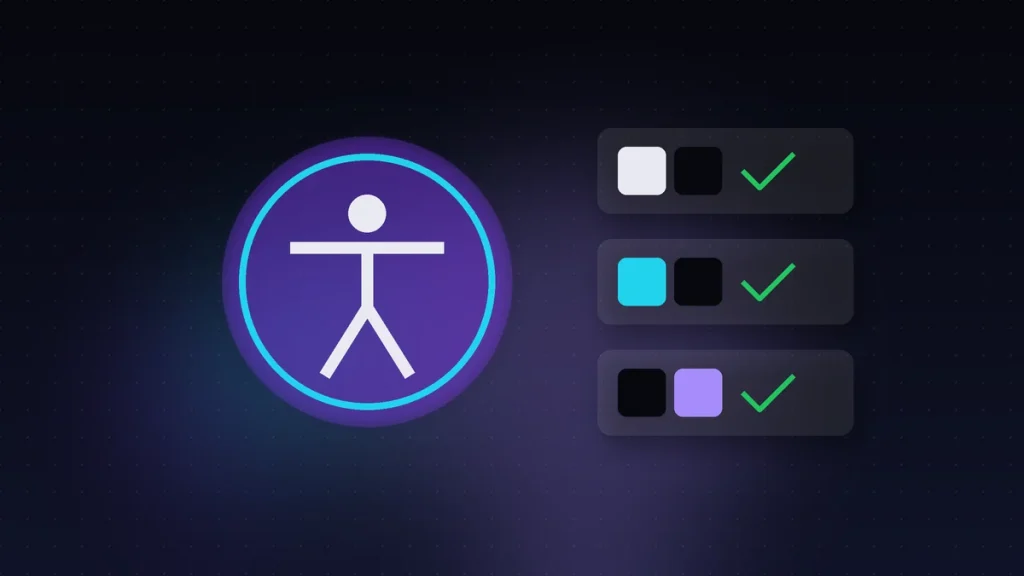
Light grey text on a white background looks nice on the designer’s screen and is unreadable on a phone in the sun. Minimum contrast is measurable, not a matter of opinion.
Keyboard and screen readers
Everything that can be done with a mouse must be possible with a keyboard, and a screen reader must be able to describe every visual element.
Real structure
Headings have to be real headings and not bigger bold text. The same hierarchy that helps a blind person helps the search engine.
What a web accessibility audit checks
Contrast, keyboard navigation, alternative text and forms. Plus how a screen reader reads it.
The good part
Here is what almost nobody mentions: most accessibility requirements improve the website for everyone, not just for people using a screen reader.
Proper contrast is easier to read outdoors. A well-built heading structure is exactly what SEO and search positioning needs. A form with clear labels is filled in faster and abandoned less. So the effort pays for itself in several ways at once.
Where to start without going mad
There is no need to rebuild the whole site. It is best to prioritise the work by impact, and these four things usually solve a good part of the problem:
- Start with the contrast of your brand colours on the backgrounds you actually use.
- Go through the whole website with the Tab key, checking that you can always see where you are.
- Alternative text goes on images that convey information, and is left empty on decorative ones.
- In forms, associated labels and error messages that explain what is wrong.
Then everything else. But start by measuring: an audit tells you where you stand before you spend a single euro.
Tools for measuring web accessibility
Automated tools detect some of the problems. However, a manual review is always needed.
Beware of automatic patches
Many add-ons have appeared that promise to “make your website accessible” with one line of code. It is best to be wary, because an overlay does not fix a badly built structure; at most, it disguises it.
Accessibility is built into the design and the code, which is exactly where we work on website design. A patch on top does not change the HTML underneath.
Web accessibility and search positioning, the same job
There is an overlap worth taking advantage of, because it turns an obligation into an investment. Much of what web accessibility requires is exactly what the search engine needs to understand a page.
- Hierarchical headings guide a screen reader and also tell the search engine what each section is about.
- Alternative text describes the image to someone who cannot see it, and it is also the only thing the search engine can read from it.
- Descriptive link text avoids “click here”, which says nothing to either a person or a machine.
- With semantic HTML people can navigate by region, and it improves how the content is interpreted.
- Speed helps people on a poor connection and is a declared ranking factor.
So if you are going to make the effort, go all the way: the same work pays two bills.
Web accessibility in online shops
In a shop, the checkout process is what matters most. For example, making sure the cart works with the keyboard alone.
What happens if nothing is done
It is worth being realistic here. Nobody is going to inspect a small company’s website tomorrow, and the first enforcement actions will focus on large-scale services.
However, the risk is not just the fine. An inaccessible website shuts out real customers, and in a public tender or when qualifying as a supplier to a large company, web accessibility already appears as a requirement. You are more likely to be asked for it in a tender document than in an inspection.
In short
Web accessibility is now a legal requirement with deadlines and fines, and it is also one of the few obligations that improve the product while you comply with them. If your website predates June 2025, you have time; if you are going to rebuild it, do it properly from the start, because it costs the same.
Want to know where yours stands? The first call and the audit are free.
Web accessibility as a habit
It is not a task you do once. On the contrary, every new page should be born accessible.
Where to go from here
If you take away only one idea from all this, let it be this one: web accessibility is not added at the end, it is decided at the start. When it arrives as a patch it costs three times as much and ends up worse.
That is why it is worth including it in the brief from day one, just like performance or search positioning. And complying with it leaves you with a website that is quicker to read and easier for anyone to use, so the work does not just end up in a file.